Pfizer CEO Cites Public’s ‘Legitimate Anger’ at Corporations
Speaking to a roomful of CEOs in Boston yesterday, Jeff Kindler said corporations must face the “real and legitimate anger” of the public and regain lost trust, according to the Connecticut newspaper the Day. “When the majority don’t trust you, they will find a way to force you to change,” he said.
… there was abundant information in the public domain as of 2001 at least suggesting the possibility that [Merck] had engaged in securities fraud.
The company is taking that somewhat surprising position to bolster its case in investor lawsuits that allege the company downplayed the safety risks of Vioxx.
Specifically, Merck has argued that investors waited too long to file the suits. (Investors have two years to sue from the time they should have suspected fraud.) So the lawyers on both sides are arguing over when investors had enough information to file a lawsuit.
By the way, besides arguing that investors should have sued sooner, Merck is also arguing that there isn’t enough evidence for investors to make a case against the company, the WSJ notes.
How a Decades-Old Drug Is Still a Patented Blockbuster Abbott isn’t likely to face generic competition on its cholesterol drug TriCor until at least March, 2011, according to an SEC filing the company put out yesterday. Filings like this come out all the time, but this one is particularly striking because the key compound in TriCor, generically known as fenofibrate, was discovered in the 1960s and hit the market in Europe in 1975. Drugs that old are almost always generic.
Yesterday, McCain began the Republican assault on health care reform by proposing to strip the Senate bill of its proposed $487 billion in Medicare reductions. The "unspecified" reductions, McCain said, would "directly impact the health care of citizens in this country":
All of these are cuts in the obligations that we have assumed and are the rightful benefits that people have earned... I will eagerly look forward to hearing from teh authors of this legislation as to how they can possibly achieve half a trillion dollars in cuts without impacting existing Medicare programs negatively and eventually lead to rationing of health care in this country.
It's a bit rich for McCain to make this argument, given that it was just a little more than a year ago McCain himself, as a presidential candidate, was calling for substantially larger Medicare cuts. As Igor Volsky explains over at Wonk Room:
In October 2008, the McCain campaign announced that the Senator would pay for his health plan “with major reductions to Medicare and Medicaid…in a move that independent analysts estimate could result in cuts of $1.3 trillion over 10 years to the government programs.” Those cuts would have reduced Medicare and Medicaid spending by as much as 20% over 10 years and cut into benefits.
McCain has plenty of company in his hypocrisy. As Volsky goes on to note, many of the Republicans likely to vote in favor of McCain's amendment voted for the Balanced Budget Act of 1997, whichalso called for substantial Medicare cuts. Sam Brownback, Charles Grassley, Jon Kyl... the list goes on.
Of course, there were some critical differences between the Medicare reductions Republicans backed during the 1990s and the ones Democrats propose today. But those differences don't exactly put the Republican attacks in a more favorable light.
During the 1990s, Republicans eyed Medicare savings as a way to free up money for tax cuts, the majority of which would benefit the wealthy. Today, Democrats want to use Medicare savings as a way to finance health care reform, which will--on balance--do a lot more to help the poor and middle-class. You can argue whether such a shift is fair--more on that later--but it's hard to argue that such a shift is less fair than what the Republicans had in mind.
In the '90s, the Republicans weren't overly specific about the kinds of cuts they had in mind. They simply wanted to slash Medicare's funding, in many cases because they supported Newt Gingrich's crusade to let Medicare "wither on the vine." The Democratic approach is to find savings that target the program's inefficiencies, whether it's unjustified subsidies to private insurance companies or payments to hospitals that have chronically high rates of inpatient infections. If those reductions work as planned--and I think there's good reason to think they will, although I concede that's a fair debate--one result will be better care for seniors.
Most important of all, though, may be the sheer magnitude of the cuts on the table. In October, the Kaiser Family Foundation compared the proposed reductions in the House and Senate health reform bills to the ones that passed into law as part of the 1997 Balanced Budget Act. The Foundation's staff concluded that the Senate bill would reduce Medicare spending by 5 percent over ten years, while the Balanced Budget Act reduced spending by 12 percent (which, by the way, was a lesser reduction than the Republicans originally proposed). Continue Reading
A new Medicare Payments Advisory Commission study of variation in government health care spending has dealt a serious blow to assertions that 30 percent of Medicare is wasted.
By controlling for differing prices and physician payment rates, the respected MedPAC looked was able to look at service usage rates in every metropolitan area in the country. It then compare them to the national average.
It found the vast majority were within 10 percent of average, with mostly rural and small metros averaging in the low 90-percent range and mid-sized and some large cities accounting for most of the high-spending regions, but usually less than 10 percent the mean. Continue Reading
In a pitch to two of America’s potent political constituencies, Senate Democrats and Republicans turned the first full day of debate over major health care legislation into a battle over who would better protect the vulnerable. Continue Reading
If America’s elderly think there is an eerie echo in all of the warnings in Washington about frightful cuts to Medicare as a result of the Democrats’ proposed health care legislation, they are right. They have heard it all before.
Just 13 months ago, then Senator Barack Obama accused his Republican rival in the presidential race, John McCain, of proposing “drastic cuts to Medicare.”
The Obama campaign asserted that Mr. McCain’s health care proposal posed a serious risk for Medicare beneficiaries, by proposing cuts that would total $882 billion over 10 years and would likely require “cuts in benefits, eligibility or both.”
Those accusations prompted a McCain campaign adviser, Douglas Holtz-Eakin to defend his health care plan, saying it would leave seniors with “exactly the same benefits.”
Now, of course, the tables are turned.
Senate Democrats have proposed reducing government spending on Medicare by nearly $500 billion over 10 years to help pay for the legislation, which seeks to provide health benefits to 31 million Americans who are currently uninsured.
And it is President Obama and his aides who are insisting that seniors would have exactly the same benefits, because the changes in Medicare would focus on eliminating waste and reducing medical expenses in parts of the country that now spend more than the national average while getting the same outcomes for patients.
Not to be left out of the turnabout, Senator McCain, Republican of Arizona, is assailing the Democrats for proposing some of the very same reductions in Medicare that he endorsed during his presidential campaign.
Offering the very first Republican amendment to the health care bill, Mr. McCain proposed sending the measure back to the Senate Finance Committee with instructions to strip out all of the proposed reductions in Medicare spending. Continue Reading
Lost in the fight over health reform is a single, huge truth - if the private insurance market worked, there would be no need for reform.
We wouldn't be in this mess if private insurers were able to control cost inflation. And at the end of the day, that's what they are supposed to do. Sure they have lots of experience in underwriting and risk selection, and some have made some progress in some areas of disease management/mitigation, but UHC and Coventry and Wellpoint and HealthNet et al's 'experience' have not been able to consistently deliver lower health care costs.
I know there are lots of reasons/problems/complicating factors, but the stark reality is when it comes to controlling inflation, none of them have been able to.
As the Senate begins debate on its health reform bill we should ask whether the bill is really about reform. I say this because it appears to be about covering the uninsured (a good thing) potentially at the expense of the currently insured and the federal budget (a bad thing) and about replacing the commercial health insurance marketplace with a government-run plan (also a bad thing).
Improper payments for health care made up a large portion of the $98 billion the federal government spent inappropriately in fiscal 2009. This total was an increase of $26 billion over the previous year, according to a report issued by the White House Office of Management and Budget.
The Nov. 17 report concluded that Medicare fee for service improperly spent $24 billion in fiscal 2009, a rate equivalent to 7.8% of total outlays, and Medicaid improperly spent $18 billion, a rate of 9.6%. Medicare Advantage improperly spent $12 billion in 2009, a rate of 15.4% of total outlays on the private plans.
The Medicare fee-for-service error rate was just 3.6% in 2008. Continue Reading
Kaiser Health News, in a story produced in collaboration with The Washington Post, reports on adult day care. It "may soon become harder to find and afford. The almost 4,000 state-licensed centers around the country rely heavily on funding from state legislatures and charities, which have been hit hard by the recession. Advocates for adult day-care programs are pushing to include them in federal health-care overhaul legislation while also lobbying state legislatures and suing state regulators to keep centers from shutting their doors" (12/2). Read entire story.
Though he has no official government position, Tom Daschle, a former Senate leader and one-time nominee for health secretary, is still attending key health-reform meetings, the Associated Press reports. "The outsized role is unusual for someone who's an adviser to lobbying firms, especially given Obama's campaign vow to change business as usual in Washington," according to the AP. This week, Daschle met with current Senate Majority Leader Harry Reid, D-Nev., White House Chief of Staff Rahm Emanuel, and the "actual HHS secretary, Kathleen Sebelius. Sebelius was Obama's second choice for the job after Daschle withdrew amid (a) tax controversy." A spokesman for Reid said it was President Obama's idea to include Daschle in the overhaul effort (Werner, 12/2).
Meanwhile, "Daschle's history as an adviser to some of the health care industry's most influential companies is raising the ire of public interest groups and GOP officials, who have questioned his increasingly prominent roll," Politico reports. Sen. John Cornyn, R-Texas, said "Mr. Daschle's presence in this meeting raises serious ethical concerns and should make clear to the American people that special interests, not their interests" are at issue in the health debate (Frates and Brown, 12/2).
The health insurance system isn't the only thing getting revamped should Congress pass a health bill; both the Senate and the House bills include provisions that might mean big changes for the food, drug and medical devices industries. Continue Reading
We often refer to aging as a women’s issue, largely because women live longer than men. However, the connection between women and aging actually begins much earlier in life for many of us who are family caregivers. Decades before we reach old age, many boomer women are helping older relatives negotiate the challenges of aging.
A recent rerelease of data from The Caregiving Project for Older Americans puts a $360-billion price tag on the value of this family caregiving. Basically, that’s the cost that we as a nation would have paid in 2006 to provide the kind of “free” services and supports that family caregivers offered to aging relatives. Most significantly, the bulk of that contribution – between $207 billion and $263 billion – was provided by women. Continue Reading
Most Thanksgiving e-mails include an animated turkey or a Black Friday coupon. Not Dave Bannerman’s. Instead, the CEO of the Ohio Masonic Home asked his family and friends tell their senators about why the CLASS Act must be part of health care reform.
In his message, Bannerman asked loved ones from around the country to have their “friends, relatives and acquaintances participate in AAHSA’s Call-in Day on Dec. 3 to “help us fight to keep the CLASS plan in health care reform.” Continue Reading
On the day I posted a story about the secret war on Social Security and Medicare a couple of weeks ago, 12 Democratic senators and one Independent signed a letter to Senate Leader Harry Reid asking that he support one of the several bills in Congress that would set up a commission “to deal with our nation's long-term fiscal imbalances.”
That sounds like a responsible thing to do, don't you think? Except that this “entitlement commission,” which some are trying to rename “deficit commission” to sound better, hands over just about all jurisdiction for Social Security and Medicare to an outside commission. That commission could submit recommendations to Congress which would have no opportunity for debate or amendments and would be allowed only an up or down vote.
The people who are calling this a back door effort to gut Social Security are exactly right. As I explained in the earlier post, one of the speakers at a Senate Finance Committee hearing on the commission proposal from Senators Kent Conrad and Judd Gregg was the head of the Peter G. Peterson Foundation, David M. Walker. Peterson, who funded his foundation with $1 billion of his personal fortune, has spent decades lobbying to kill Social Security.
Dean Baker, co-director of the Center for Economic and Policy Research put it Center for Economic and Policy Research"more strongly yesterday:
“There is a determined clique, led by Wall Street investment banker Peter Peterson, that has been trying to cut Social Security and Medicare benefits for at least the last two decades...
“It is especially outrageous that the Peterson crew would be leading this crusade to cut Social Security and Medicare. In part, because they were running around yelling about deficits projected for 2050, those of us who were trying to warn about the $8 trillion housing bubble could not get attention.
“The Peterson's crew imaginary horror story helped to conceal the real disaster that was about to blow up the economy. Now this gang has the nerve to use the deficits created in part by their own incompetence as a reason to push their agenda for cutting Social Security and Medicare.”
Contrary to the Peterson Chicken Little scenario and President Bush's falsehood, when he was trying to sell the nation on Social Security privatization, Social Security is not “broke,” as Bush put it, and is not going broke.
“...the funding gap is just over one-half of one percent of GDP (Gross Domestic Product) or about what it would cost to make President Bush’s tax cuts for the top one percent of taxpayers permanent."
And in fact, according to the same report, extending all those tax cuts (not just the top one percent) would cost 1.95 percent of GDP – three-and-a-half times the Social Security shortfall. Obviously, there is an easy fix for Social Security right under our noses.
On Monday, Talking Points Memo reported that moderate and conservative Democrats are so determined to get an the entitlement commission that if Congress does not pass legislation for it, they will refuse to vote for the must-pass debt ceiling legislation which, if it is defeated, “would trigger a default, and, perhaps, economic calamity.”
Personally, I don't believe those Democrats would put their futures on the line in such a drastic manner, but the threat of the commission doesn't go away whether they do or don't, and no one knows where the White House stands on the commission issue.
As to the Senate, on Monday an aide in Leader Harry Reid's office told me only this:
"Senator Reid has been actively talking with many of his colleagues and administration officials about this type of proposal. Those conversations are ongoing."
Josh Marshall at TPM points out that if you think getting the budget under control is important at this point in time (and that is highly debatable), there are only two ways to do it: raising taxes or cutting social programs like Social Security and Medicare – and the latter is what will happen if the entitlement commission comes into being.
Aside from Dean Baker and Talking Points Memo, as far as I can tell, the pressure to pass legislation creating the entitlement commission is being ignored by mainstream media. That leaves you and me to stay on top of this, and you should let your congressional representatives know you are watching them on this issue. There are many places online to make it easy to contact them; this is one of them.
Here are the names of the 13 senators who signed the letter to Leader Harry Reid in support of commission legislation:
Evan Bayh (Indiana) Mark Begich (Alaska) Michael Bennet (Colorado) Kent Conrad (North Dakota) Diane Feinstein (California) Kay Hagen (North Carolina) Amy Klobuchar (Minnesota) Joseph Lieberman (Connecticut) Claire McCaskill (Missouri) Bill Nelson (Florida) Arlen Specter (Pennyslvania) Mark Udall (Colorado) Mark Warner (Virginia)
As Sandy Wise wisely pointed out to me, “We shouldn't cut Social Security because we bailed out Wall Street.”
Susan Katz thought she knew all about caring for old people. Trained as a social worker, she had spent more than 15 years working for home care agencies and for assisted and independent living facilities. So when her own parents began to falter in their mid-80s – her mother had Parkinson’s disease, and her father was debilitated by the aftereffects of prostate cancer treatment – she felt prepared to step in and help.
At 3PM today, eastern U.S. time, Senator Herb Kohl, who is the chairman of the Senate Special Committee on Aging, will hold a live panel discussion and briefing about how the Senate Health Care Reform bill will benefit elders.
Panelists will include representatives from Consumers Union, AARP, The Medicare Rights Center and The National Consumer Voice for Quality Long Term Care.
You can watch live at http://www.aging.senate.gov.
As Congress and the Obama Administration search for ways to reform health care, a new report demonstrates that rationing and price controls are not the only ways to control health care costs. Better Ways to Pay for Health Care: A Primer on Healthcare Payment Reform provides an easy-to-understand explanation of the problems with current health care payment systems, and describes alternative payment systems that will address these problems.
The concise guidebook, produced by the national nonprofit Network for Regional Healthcare Improvement (NRHI) with support from the Robert Wood Johnson Foundation, demonstrates how the way we pay for health care today drives up costs and penalizes doctors and hospitals that deliver higher quality care. But the report doesn’t just document the problems—it explains alternative payment systems that can solve the problems without placing the kinds of restrictions on doctors and patients that doomed many managed care initiatives a decade ago. Continue Reading
The community-associated strain of the deadly superbug MRSA—an infection-causing bacteria resistant to most common antibiotics—poses a far greater health threat than previously known and is making its way into hospitals, according to a study in the December issue of Emerging Infectious Diseases. The new threat is easily picked up in fitness centers, schools, and other public places and has increased the overall burden of MRSA within hospitals, the report found.
The study, which analyzed data from more than 300 microbiology labs serving hospitals all over the United States, found a seven-fold increase in newer “community-associated” strains of methicillin-resistant staphylococcus aureus, or MRSA, in outpatient hospital units between 1999 and 2006. According to study authors, this increase threatens hospital safety because many hospitals share their resources, such as surgical sites, or have doctors or patients that move back and forth between the different areas of the hospital. Continue Reading
On November 30, 2009, the U.S. Senate began debating the Patient Protection and Affordable Care Act (Act).
Senate Republicans offered a proposed Amendment to the proposed Act, which would send the legislation back to the Senate Finance Committee with instructions to report the bill back to the Senate without approximately $440 billion in Medicare payment reductions.
The proposed Amendment was introduced by Senator John McCain who issued a Press Release stating in part "[s]lashing Medicare by nearly $500 billion, one-half a trillion dollars, to create a new federal health care entitlement is not health care reform."
The proposed Amendment focuses on 22 potential Medicare payment reductions over the 2010-2019 time period including: Continue Reading
The health care market's broken in the U.S., and it needs more help than Congress's proposals are offering.
What cost $10,743 for per-employee health care costs at large employers in 2009 will cost will nearly triple to $28,530 in 2019 if the status quo continues. If legislative proposals currently being discussed in Congress are implemented, that cost grow to $25,435. With greater restructuring for value, malpractice reform, and evidence-based medicine, the per-employee cost rises less, to $23,151 in 10 years.
The menu of restructuring factors recommended by the Business Roundtable would soften per-employee cost growth to an annual rate of 4% -- far lower than the double-digit increases U.S. employers have faced in the 2000s.
The key recommendations offered by the Business Roundtable are:
1. To transition to a value-based delivery/payment model 2. To differentiate and reward providers based on performance 3. To hold providers accountable for quality care 4. To provide individual consumers incentives and an infrastructure that supports them in making more healthy lifestyle and informed health care decisions. Continue Reading
by Denise Tyler, PhD, in the Health Busines Blog Dr Tyler is an Investigator in the Center for Gerontology & Health Care Research at Brown University. She is the project manager for the Shaping Long-Term Care in America Project, a five-year, $10 million project funded by the National Institute on Aging that aims to improve nursing home care in the US by examining how market factors and state policies affect the quality of care delivered in the country’s 15,000+ nursing homes.
Millions of Americans live in nursing homes and millions more receive short-term care from one after a hospital stay. But the current health care reform debate has largely ignored nursing home care.
This is due, in part, to a lack of data about how and why that care is given.
As we move ahead with health care reform, we must understand how nursing homes are being utilized, what kinds of patients live in them, and what the outcomes are for the people who rely on them for care.
This matters because health care reform will likely be paid for in large part, by reductions in current health care spending. And the majority of these reductions will come from the Medicare program and nursing homes will likely be the target of these spending reductions.
Until now, there has been no resource for accessing information about nursing homes and those they care for. A new Web site that provides this information for the first time, www.LTCfocUS.org, has been developed by the Center for Gerontology and Healthcare Research at Brown University. Continue Reading
A hormone found naturally in the body may elevate prostate-specific antigen levels in men, leading physicians to perform unnecessary biopsies, according to a study in the November issue of Cancer Epidemiology, Biomarkers & Prevention. Continue Reading
The Centers for Medicare & Medicaid Services announced on Oct. 29 a new statewide effort in Mississippi to improve care for patients with diabetes.
As part of the initiative, called the Mississippi Health First Collaborative, patients will receive diabetes self-management training in their home communities. The assistance will occur in locations such as community centers or senior centers, rather than in such traditional health care settings as hospitals, physicians' offices or outpatient clinics. The training will focus on how best to control blood glucose, blood pressure and cholesterol levels.
Maryland gets federal stimulus funds for "secret shoppers" to monitor health professionals' hand hygiene. A Rhode Island hospital will videotape surgeries. Some worry about Big Brother.
Today's headlines focus on the Senate, where that chamber's official health overhaul debate started amid sharp tones and divisive issues just as the Congressional Budget Office issues a report on projected premium costs under the bill being considered.
National Association of Elder Law Attorney's Senior Housing Locator on naela.org
A free senior housing information source that lists all licensed senior housing, provides helpful tools to assist you with assessing your needs, and matches your needs against available options.
Whether driven by an acute medical situation or simply a lifestyle choice, finding the right senior housing option for yourself or a loved one can be a challenge.
The first step to success is to understand what it is that you really need from a senior housing community. Think about what factors are most important to you and your loved ones while you read through this booklet.
Download Booklet
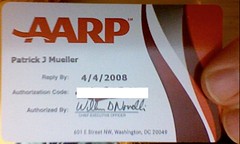
I think it’s time to call a truce in the long feud that many of us and I have been waging against AARP.
Why now? Well, AARP must be doing something right when Senator John McCain (R. Arizona), who would deny Americans the tax-payer supported health insurance coverage that he has enjoyed all his life, vowed to “fight with every fiber of my being” the proposed health reforms now before the Senate and he asked members to tear up their AARP membership cards.
Also, a group of House Republicans who have been hostile to Medicare and had no intention of supporting any real reform, sent letters to AARP accusing it of “putting political self-interests ahead of seniors” in supporting the reform bill passed by the House.
AARP rejected the complaint and, I would add, better “political self-interests” than financial. For these Republicans had no problem with AARP in 2003 when to the dismay of many members, it helped the Bush administration pass in a midnight session, over the objection of nearly every Democrat, the misnamed Medicare Part D drug bill, which among other things, hobbled Medicare, gave billions in subsidies to insurers and enriched the drug and insurance companies – and AARP. Continue Reading
 Image by wallyg via Flickr
![Reblog this post [with Zemanta]](http://img.zemanta.com/reblog_b.png?x-id=b20a1d54-a170-4639-9230-7abb9f984dab)


![Reblog this post [with Zemanta]](http://img.zemanta.com/reblog_e.png?x-id=3ae0fa15-72c7-4b7a-9063-1948f26d6d57)

![Reblog this post [with Zemanta]](http://img.zemanta.com/reblog_b.png?x-id=32c2820f-57f2-4813-8ba3-7c1d10a03f2f)
![Reblog this post [with Zemanta]](http://img.zemanta.com/reblog_b.png?x-id=1dd610b9-2450-4a10-bdc7-662e57b8c8f9)

![Reblog this post [with Zemanta]](http://img.zemanta.com/reblog_b.png?x-id=71b0bba9-5622-437b-b008-dd4cc83aa1d5)
![Reblog this post [with Zemanta]](http://img.zemanta.com/reblog_b.png?x-id=6d92727f-dca8-4ac9-a863-36a8c8520004)
![Reblog this post [with Zemanta]](http://img.zemanta.com/reblog_b.png?x-id=76f792e5-ef63-4004-8634-7126f148f75a)

![Reblog this post [with Zemanta]](http://img.zemanta.com/reblog_b.png?x-id=c898c5f0-02af-4288-a94c-1a9bd1875d55)
![Reblog this post [with Zemanta]](http://img.zemanta.com/reblog_b.png?x-id=2d40876e-2851-43d6-bedf-e66d95421b65)

![Reblog this post [with Zemanta]](http://img.zemanta.com/reblog_b.png?x-id=2bc7e4ac-58bb-4583-8ecd-a51cd1c3b715)

![Reblog this post [with Zemanta]](http://img.zemanta.com/reblog_b.png?x-id=945f29ff-afdd-4052-9eda-f8b2d6baf379)
![Reblog this post [with Zemanta]](http://img.zemanta.com/reblog_b.png?x-id=972e0a40-9f9d-40da-ab5d-21d437cfeb7b)

![Reblog this post [with Zemanta]](http://img.zemanta.com/reblog_b.png?x-id=0be1636b-01ed-441c-a4cd-0f44f0b36786)

![Reblog this post [with Zemanta]](http://img.zemanta.com/reblog_b.png?x-id=672aef19-1c77-4847-bee7-ae8ec8aafa4a)

![Reblog this post [with Zemanta]](http://img.zemanta.com/reblog_b.png?x-id=6a7ca648-7b4a-44b5-a0e0-ca7db1dc3814)
![Reblog this post [with Zemanta]](http://img.zemanta.com/reblog_b.png?x-id=5c789305-1782-4532-87d0-75dbd40212b0)
![Reblog this post [with Zemanta]](http://img.zemanta.com/reblog_b.png?x-id=283b9016-55b9-4912-89d1-0ec01b825dd9)

![Reblog this post [with Zemanta]](http://img.zemanta.com/reblog_b.png?x-id=e299ad08-4550-4516-9fae-c2c9846401e9)

![Reblog this post [with Zemanta]](http://img.zemanta.com/reblog_b.png?x-id=d939f602-97c1-4393-994f-07acb109f499)
![Reblog this post [with Zemanta]](http://img.zemanta.com/reblog_b.png?x-id=309a734d-cb06-4297-b539-2d1dc3f468ba)

![Reblog this post [with Zemanta]](http://img.zemanta.com/reblog_b.png?x-id=9ce600d3-b435-47d6-b1e1-4073c87420ac)

![Reblog this post [with Zemanta]](http://img.zemanta.com/reblog_b.png?x-id=82f319d8-94fa-402a-8a5e-90b5aa086607)
![Reblog this post [with Zemanta]](http://img.zemanta.com/reblog_b.png?x-id=6b316b9a-dd36-4510-a21f-22d77a8a3405)
![Reblog this post [with Zemanta]](http://img.zemanta.com/reblog_b.png?x-id=f73af69d-293a-427f-99f3-8d09f20d9f2a)