Showing posts with label Alzheimer's disease. Show all posts

Monday, May 9, 2011

Generation Alzheimer's

The good news is that death rates for many major diseases - HIV, stroke, heart disease, prostate cancer, and breast cancer - are declining. Sadly, the same can't yet be said about Alzheimer's. This year, the first of the Boomer Generation turns 65. To bring urgently-needed attention to the risk facing the Boomers, Alzheimer's Association recently released a groundbreaking study Generation Alzheimer's: The Defining Disease of the Baby Boomers.

The new report, "Generation Alzheimer's: The Defining Disease of the Baby Boomers," sheds light on a crisis that is no longer emerging – but here.

  • Many baby boomers will spend their retirement years either with Alzheimer's or caring for someone who has it.
  • An estimated 10 million baby boomers will develop Alzheimer's.
  • Starting this year, more than 10,000 baby boomers a day will turn 65. As these baby boomers age, one of out of eight of them will develop Alzheimer’s – a devastating, costly, heartbreaking disease. Increasingly for these baby boomers, it will no longer be their grandparents and parents who have Alzheimer’s – it will be them.
  • "Alzheimer’s is a tragic epidemic that has no survivors. Not a single one," said Harry Johns, president and CEO of the Alzheimer’s Association. "It is as much a thief as a killer. Alzheimer’s will darken the long-awaited retirement years of the one out of eight baby boomers who will develop it. Those who will care for these loved ones will witness, day by day, the progressive and relentless realities of this fatal disease. But we can still change that if we act now."
  • According to the new Alzheimer’s Association report, "Generation Alzheimer’s," it is expected that 10 million baby boomers will either die with or from Alzheimer’s, the only cause of death among the top 10 in America without a way to prevent, cure or even slow its progression. But, while Alzheimer’s kills, it does so only after taking everything away, slowly stripping an individual’s autonomy and independence. Even beyond the cruel impact Alzheimer’s has on the individuals with the disease, Generation Alzheimer’s also details the negative cascading effects the disease places on millions of caregivers. Caregivers and families go through the agony of losing a loved one twice: first to the ravaging effects of the disease and then, ultimately, to actual death.
  • "Most people survive an average of four to six years after a diagnosis of Alzheimer’s disease, but many can live as long as 20 years with the disease. As the disease progresses, the person with dementia requires more and more assistance with everyday tasks like bathing, dressing, eating and household activities," said Beth Kallmyer, senior director of Constituent Relations for the Alzheimer’s Association. "This long duration often places increasingly intensive care demands on the nearly 15 million family members and friends who provide unpaid care, and it negatively affects their health, employment, income and financial security."
  • In addition to the human toll, over the next 40 years Alzheimer’s will cost the nation $20 trillion, enough to pay off the national debt and still send a $20,000 check to every man, woman and child in America. And while every 69 seconds someone in America develops Alzheimer’s disease today, by 2050 someone will develop the disease every 33 seconds - unless the federal government commits to changing the Alzheimer’s trajectory.
  • "Alzheimer’s – with its broad ranging impact on individuals, families, Medicare and Medicaid - has the power to bring the country to its financial knees," said Robert J. Egge, vice president of Public Policy of the Alzheimer’s Association. "But when the federal government has been focused, committed and willing to put the necessary resources to work to confront a disease that poses a real public health threat to the nation – there has been great success. In order to see the day where Alzheimer’s is no longer a death sentence, we need to see that type of commitment with Alzheimer’s." The full text of the Alzheimer’s Association’s "Generation Alzheimer’s" report can be viewed at www.alz.org/boomers.

Friday, April 8, 2011

Long-term Ecstasy Use 'Raises Risk of Brain Damage and Alzheimer's' | Society | The Guardian

by Denis Campbell, health correspondent - The Guardian


Long-term Ecstasy users risk brain damage, memory loss and an increased chance of developing Alzheimer's disease, new research suggests.
Dutch researchers used MRI scans to study the brains of 10 men in their mid-20s who had taken an average of 281 ecstasy tablets over the previous six and a half years, and seven peers who had taken other drugs.
They found that the hippocampus - the part of the brain controlling memory - was 10.5% smaller among the ecstasy users, and their overall grey matter 4.6% less.
"These data provide preliminary evidence that Ecstasy users may be prone to incurring hippocampal damage", and may help explain the memory loss witnessed among such people in previous studies, the co-authors wrote in the Journal of Neurology, Neurosurgery and Psychiatry.
"Hippocampal atrophy is a hallmark for disease of progressive cognitive impairment in older patients, such as Alzheimer's disease", they added.
More
Enhanced by Zemanta

Wednesday, April 6, 2011

Research Update: 5 New Alzheimer's Genes Discovered

Two very large studies, appearing yesterday as advance, online publications of Nature Genetics, identified five additional genes linked to Alzheimer’s, doubling the number of genes believed to contribute to the disease.


The amount of genetic risk attributable to each of these newly identified genes is not large, but they may help point researchers to new ideas for the causes and/or mechanisms underlying this devastating and fatal disease.

The APOE gene remains the strongest genetic risk factor for Alzheimer’s disease.
One study by U.S. researchers analyzed the genes of 54,000 people, some with Alzheimer’s and others of the same age without the disease, and found four new genes. The other study, from mostly European scientists, confirmed the U.S. research and added an additional gene. The studies also confirmed the previous Alzheimer’s genes, making 10 genes associated with Alzheimer’s in the elderly.
Enhanced by Zemanta

Saturday, April 2, 2011

Dyeing to Prevent Dying

by Medpage Today staff

A finding that a common laboratory staining agent increased longevity in nematode worms may have implications for human lifespan as well, researchers suggested.

Thioflavin T is a widely used, yellow histological dye, used for such tasks as staining amyloid plaques and stabilizing protein fibrils in cultures.

But researchers led by Gordon Lithgow, PhD, of the Buck Institute for Research on Aging in Novato, Calif., thought the stabilizing effect might have a wider application. They exposed adult nematodes –- the standard lab species Caenorhabditis elegans -- to the substance and found that it extended their lives by about 60%.
It also suppressed some of the pathological features of aging in the worms, the group reported online in Nature.

The hypothesis is that the stabilizing effect of the substance helps to preserve normal protein homeostasis and prevent aggregation of proteins, including the accumulation of amyloid-beta that's characteristic of Alzheimer's.


Enhanced by Zemanta

Thursday, March 31, 2011

Generation Alzheimer's - The Defining Disease Of The Baby Boomers

Diagram of the brain of a person with Alzheime...Image via Wikipedia
The Alzheimer's Association has released a new report, "Generation Alzheimer's: The Defining Disease of the Baby Boomers," sheds light on a crisis that is no longer emerging – but here.

"Alzheimer’s is a tragic epidemic that has no survivors. Not a single one," said Harry Johns, president and CEO of the Alzheimer’s Association. "It is as much a thief as a killer. Alzheimer’s will darken the long-awaited retirement years of the one out of eight baby boomers who will develop it. Those who will care for these loved ones will witness, day by day, the progressive and relentless realities of this fatal disease. But we can still change that if we act now."

Alzheimer’s is the only cause of death among the top 10 in America without a way to prevent, cure or even slow its progression. But, while Alzheimer’s kills, it does so only after taking everything away, slowly stripping an individual’s autonomy and independence. Even beyond the cruel impact Alzheimer’s has on the individuals with the disease, Generation Alzheimer’s also details the negative cascading effects the disease places on millions of caregivers. Caregivers and families go through the agony of losing a loved one twice: first to the ravaging effects of the disease and then, ultimately, to actual death.

More
Enhanced by Zemanta

Monday, March 21, 2011

FDA Puts Early Alzheimer's Test on Hold

By Peggy Peck, Executive Editor, MedPage Today

The FDA will not approve the novel contrast agent, florbetapir -- widely touted as a breakthrough for early diagnosis of Alzheimer's disease -- until manufacturer Eli Lilly puts a training program in place, the company announced.
More

Wednesday, March 16, 2011

Stem Cell Discovery Could Help Advance Alzheimer's Research

by RTTNews Staff Writer

New research appearing in the current edition of the journal Stem Cells details how a team of researchers at the Northwestern Medical Center have converted a set of stem cells into a critical neuron that dies as Alzheimer's disease begins to develop.

According to the research team, the new development will allow for further inquiries into the nature of these neurons, why they die and how to prevent their death.

"Now that we have learned how to make these cells, we can study them in a tissue culture dish and figure out what we can do to prevent them from dying," says lead research Dr. Jack Kessler in a statement.
More

Tuesday, March 15, 2011

The Past is Hard to Forget when Evaluating New Dementia Screening Tests | GeriPal - Geriatrics and Palliative Care Blog

If we care about primary care physicians actually using the screening tests we develop, then we should care about their accessibility to those clinicians. To put it simply, the more barriers we put in place, the less likely anyone will use them to assess cognitive status in the elderly.

The prior gold standard for cognitive screening was the mini-mental status exam (MMSE). This test used to be freely available online, in books, and on pocket cards that were distributed to medical students and residents throughout the country. This all changed in March of 2001 when MiniMental, LLC (the current owners of the MMSE copyright) granted Psychological Assessment Resources (PAR) the exclusive rights to publish, license, and manage all intellectual property rights to the MMSE. Suddenly, after decades of neglect, PAR began enforcing the copyright on the MMSE (see "stealth patents"). Now physicians would have to pay about $1 per test, and importantly, another barrier to cognitive screening was erected.

In the wake of the MMSE copyright enforcement, several new and improved cognitive screens began hitting the geriatrics store shelves. One excellent example is the Montreal Cognitive Assessment (MoCA). This is a free, brief, and validated screening tool with high sensitivity and specificity for detecting MCI and dementia (http://www.mocatest.org). It’s easy to use, but does require one to print out the actual test in order to administer it to patients.

What about a test that requires no props and no special forms? This months Archives of Internal Medicine released a study on the Sweet 16. The article describes the creation of this new brief cognitive assessment tool, and its comparison to the MMSE in a cohort of patients. A long story made short: the Sweet 16 was found to be at least equivalent to, and possibly superior to that of the MMSE (at least in this cohort of patients). Some of the results included:
  • The average time to complete the test was 1.4 to 2.9 minutes
  • When compared to the IQCODE, a Sweet 16 score of less than 14 demonstrated a sensitivity of 80% and a specificity of 70%, whereas an MMSE score of less than 24 showed a sensitivity of 64% and a specificity of 86%.
  • When compared with clinical diagnosis, a Sweet 16 score of less than 14 showed a sensitivity of 99% and a specificity of 72% in contrast to an MMSE score with a sensitivity of 87% and a specificity of 89%.
More
Enhanced by Zemanta

Alzheimer's Association - Facts and Figures


The Alzheimer’s Association Facts and Figures report details the growing prevalence and escalating impact of Alzheimer’s and dementia on individuals, caregivers, families, government and the nation’s healthcare system.


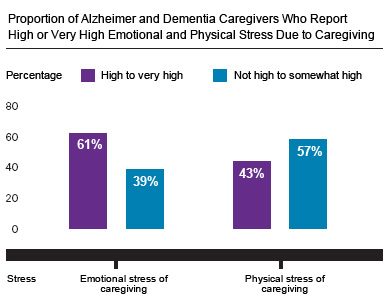
Unpaid caregivers and stress

There are nearly 15 million Alzheimer’s and dementia caregivers providing 17 billion hours of unpaid care valued at $202 billion. Facts and Figures finds that caregivers not only suffer emotionally but also physically. Because of the toll of caregiving on their own health, Alzheimer’s and dementia caregivers had $7.9 billion in additional health care costs in 2010. More than 60 percent of family caregivers report high levels of stress because of the prolonged duration of caregiving and 33 percent report symptoms of depression.

Created from data from the Alzheimer’s Association 2010 Women and Alzheimer’s Poll, October 2010.
Source: Alzheimer’s Association 2011 Alzheimer’s Disease Facts and Figures.

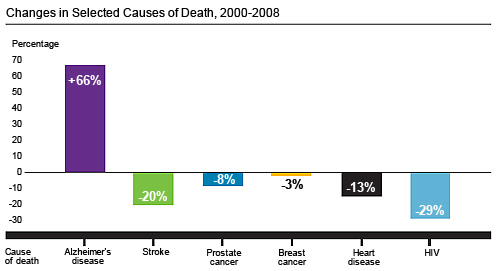
Deaths from Alzheimer's disease

Alzheimer’s is the sixth-leading cause of death in the country and the only cause of death among the top 10 in the United States that cannot be prevented, cured or even slowed. Based on mortality data from 2000-2008, death rates have declined for most major diseases while deaths from Alzheimer’s disease have risen 66 percent during the same period.

Source: Alzheimer’s Association 2011 Alzheimer’s Disease Facts and Figures.

Alzheimer facts in each state

The 2011 Alzheimer's Disease Facts and Figures report also contains data on the impact of this disease in every state across the nation. Click below to see the effect that Alzheimer's is having in your state.


Enhanced by Zemanta

Tuesday, March 1, 2011

More Evidence That Alzheimer's Disease May Be Inherited From Your Mother

Results from a new study contribute to growing evidence that if one of your parents has Alzheimer's disease, the chances of inheriting it from your mother are higher than from your father. The study is published in the March 1, 2011, print issue of Neurology®, the medical journal of the American Academy of Neurology.

"It is estimated that people who have first-degree relatives with Alzheimer's disease are four to 10 times more likely to develop the disease themselves compared to people with no family history," said study author Robyn Honea, DPhil, of the University of Kansas School of Medicine in Kansas City.

For the study, 53 dementia-free people age 60 and over were followed for two years. Eleven participants reported having a mother with Alzheimer's disease, 10 had a father with Alzheimer's disease and 32 had no history of the disease in their family. The groups were given brain scans and cognitive tests throughout the study.

The researchers found that people with a mother who had Alzheimer's disease had twice as much gray matter shrinkage as the groups who had a father or no parent with Alzheimer's disease. In addition, those who had a mother with Alzheimer's disease had about one and a half times more whole brain shrinkage per year compared to those who had a father with the disease. Shrinking of the brain, or brain atrophy, occurs in Alzheimer's disease.

"Using 3-D mapping methods, we were able to look at the different regions of the brain affected in people with maternal or paternal ties to Alzheimer's disease," said Honea. "In people with a maternal family history of the disease, we found differences in the break-down processes in specific areas of the brain that are also affected by Alzheimer's disease, leading to shrinkage. Understanding how the disease may be inherited could lead to better prevention and treatment strategies."

The study was supported by the National Institute on Aging and the National Institute of Neurological Disorders and Stroke.

Story Source:
The above story is reprinted (with editorial adaptations by ScienceDaily staff) from materials provided by American Academy of Neurology.
More
Enhanced by Zemanta

Wednesday, February 23, 2011

Caring For Our Brains

As the average life span becomes longer, dementia becomes more common. Swedish scientist Laura Fratiglioni has shown that everyone can minimize his or her risk of being affected. Factors from blood pressure and weight to the degree of physical and mental activity can influence cognitive functioning as one gets older.

The lengthening of the average life span in the population has caused an increase in the prevalence of aging related disorders, one of which is cognitive impairment and dementia. An expert panel estimates that worldwide more than 24 million people are affected by dementia, most suffering from Alzheimer's disease. In the more developed countries, 70 percent of the persons with dementia are 75 years or older. Age is the greatest risk factor for developing dementia. But there is growing evidence that the strong association with increasing age can be, at least partially, explained by a life course cumulative exposure to different risk factors.

Laura Fratiglioni's research group at Karolinska Institutet is a leader in identifying the risk factors that lie behind developing dementia and using this knowledge to develop possible preventative strategies. The group's research has shown that the risk is partly determined by an individual genetic susceptibility, and that active involvement in mental, physical and social activities can delay the onset of dementia by preserving cognitive functions. Further education early in life has a protective effect, and the group's research has shown that it is never too late to get started.

"The brain, just as other parts of the body, requires stimulation and exercise in order to continue to function. Elderly people with an active life - mentally, physically and socially - run a lower risk of developing dementia, and it doesn't matter what the particular activities are", says Professor Laura Fratiglioni.

Laura Fratiglioni's research has shown that physical factors are also significant. Not only high and low blood pressure, but also diabetes and obesity when middle-aged increase the risk of developing dementia after the age of 70. "What is good for the heart is good for the brain", she says.

Knowledge about risk factors and how to protect the brain from dementia is based on observational studies in which scientists have discovered statistical correlations in the population. Scientists in other current studies that are carried out in Europe are investigating what happens when a large number of study participants are given special help to better control vascular risk factors and to stimulate social, physical and mental activities. which should, at least, lead to a delay of dementia onset.

"You could say that we are progressing from observation to experiment. This means that in a few years we will know more about which strategies are most effective in preventing neurodegenerative disorders", says Laura Fratiglioni.

Source:
Sabina Bossi
Karolinska Institutet
Enhanced by Zemanta

Friday, February 18, 2011

Measuring Person-Centered Caregiving

by John Davy on February 15, 2011 in Aging in Action

Person-centered care has become the dominant model for dementia care in the US and UK. This model emphasizes that older adults who are receiving care should be viewed as social beings in a relationship. More concretely, this involves recognizing the personality, values and individual needs of the care recipient, and understanding their behavior through this lens. Within this framework, so-called resistive behaviors, such as withdrawal or aggressive behaviors toward caregivers, are framed as a sign of individual needs.

Despite the growing emphasis on person-centeredness, there has been relatively little done to formally measure the person-centeredness of caregivers. Researchers at Wichita State University and the University of Kansas recently published a study (Lann-Wolcott et al 2011) to validate two measures of person-centered caregiving, and to determine whether person-centeredness would reduce resistive behaviors on the part of individuals with dementia. One of these, the Person-Centered Behavior Inventory (PCBI) measures the extent to which the caregiver performed a set of targeted person-centered behaviors. The other measure, the Global Behavior Scale (GBS), does not count specific behaviors but is a more general assessment of the manner in which care is delivered. Further, the study explored a few other questions about the instruments– for example, whether different kinds of patients responded differently to person-centered care, and whether there was an effect of caregiver age.
More
Enhanced by Zemanta

Higher Levels Of Social Activity Decrease The Risk Of Developing Disability In Old Age

Afraid of becoming disabled in old age, not being able to dress yourself or walk up and down the stairs? Staying physically active before symptoms set in could help. But so could going out to eat, playing bingo and taking overnight trips.

According to research conducted at Rush University Medical Center, higher levels of social activity are associated with a decreased risk of becoming disabled. The study has just been posted online and will be published in the April issue of the Journal of Gerontology: Medical Sciences.

"Social activity has long been recognized as an essential component of healthy aging, but now we have strong evidence that it is also related to better everyday functioning and less disability in old age," said lead researcher Bryan James, PhD, postdoctoral fellow in the epidemiology of aging and dementia in the Rush Alzheimer's Disease Center. "The findings are exciting because social activity is potentially a risk factor that can be modified to help older adults avoid the burdens of disability."

The study included 954 older adults with a mean age of 82 who are participating in the Rush Memory and Aging Project, an ongoing longitudinal study of common chronic conditions of aging. At the start of the investigation, none of the participants had any form of disability. They each underwent yearly evaluations that included a medical history and neurological and neuropsychological tests.

Social activity was measured based on a questionnaire that assessed whether, and how often, participants went to restaurants, sporting events or the teletract (off-track betting) or played bingo; went on day trips or overnight trips; did volunteer work; visited relatives or friends; participated in groups such as the Knights of Columbus; or attended religious services.

To assess disability, participants were asked whether they could perform six activities of daily living without help: feeding, bathing, dressing, toileting, transferring and walking across a small room. They were also asked whether they could perform three tasks that require mobility and strength: walking up and down a flight of stairs, walking a half mile and doing heavy housework. Finally, they were asked about their ability to perform what are referred to as "instrumental" activities of daily living, such as using the telephone, preparing meals and managing medications. Difficulties with household management and mobility are more common and represent less severe disability than difficulty with self-care tasks, so the measures represented a range of disability.

Results showed that a person who reported a high level of social activity was about twice as likely to remain free of a disability involving activities of daily living than a person with a low level of social activity, and about 1.5 times as likely to remain free of disability involving instrumental activities of daily living or mobility.

Why social activity plays a role in the development of disability is not clear, James said. Possibly, social activity may reinforce the neural networks and musculoskeletal function required to maintain functional independence.

Future research is needed to determine whether interventions aimed at increasing late-life social activity can play a part in delaying or preventing disability, James said.

Other researchers at Rush involved in the study were Patricia Boyle, PhD, Dr. Aron Buchman and Dr. David Bennett.

Source:
Rush University Medical Center

Enhanced by Zemanta

PowerUp Friday: Culture change “awakenings” « ChangingAging.org

By Dr. Al Power in the Changing Aging blog

Bill asked me to respond to a profile in The New York Times New Old Age blog Tuesday on Sunrise Nursing Home in Two Harbors, Minn, highlighting their work in reducing psychotropic medications in people living with dementia. The resultant “awakenings” of the people coming off the medications has convinced Ecumen, the parent organization, to bring the approach to 15 other nursing homes in the state.

At Sunrise, all 10 people who were taking antipsychotics successfully stopped the medication. This validates several studies (heretofore largely ignored by the medical press), which have shown that, with targeted interventions, the vast majority of people in nursing homes can have their anrtipsychotic drugs removed, with no objective evidence of worsening behavioral distress.

The key for Sunrise was to enlist the entire staff of the home in understanding and learning how to connect with and respond to the needs of the elders–a sort of cross-training in dementia. They also added two staff for this home of 60 elders, costing about $75,000 in annual salaries. But the price of the 10 antipsychotic drugs alone is at least half that annually, not to mention the decreased distress and increased well-being that resulted. A small price to pay indeed.

Kudos to Sunrise for their courageous leap forward, and for getting the word out through the New Old Age blog. It is critical that we educate both the public and long term care providers that there is a clear alternative to “being a zombie in a nursing home,” as Laurel Baxter, the Awakenings project manager, puts it. I have now corresponded with four Times reporters in the past year, one in a personal meeting, but have yet to see this issue seriously addressed in the print version.

In the article, Dr. Mark Lachs of Weill Cornell Medical College made the important observation that these drugs “get perpetualized, like insulin”. I often tell audiences that these drugs are highly addictive–not to the person with dementia, but to the families and care staff.

The article continues to perpetuate some ideas, however, which I believe to be patently false. One is that the medications still have an important role in soothing some people’s distress. While the drugs may be occasionally needed in emergency situations, they will never correct unmet needs, and should never be seen as helping a person attain well-being. The “soothing” is primarily sedation–it is almost never an answer to the real problem.

The other is the notion that these “behaviors” are an inevitable result of brain disease. I believe they are the result of a mismatch between the needs of a changing individual and an environment that is inadequate to meet those needs. As I’ve said before, it’s like expecting a paraplegic to walk, and then sedating him when he gets frustrated that we won’t give him help for his disability.

Last week, Dr. Richard Taylor came to town and reminded us that “I am not dying of a fatal disease; I am living with a chronic disability.” However you choose to classify dementia, this view creates a whole new paradigm for helping each person achieve her or his highest practicable level of well-being. That will never be found in a bottle.

Dr. Al Power is author of Dementia Beyond Drugs and a weekly contributor to ChangingAging.org


PowerUp Friday: Culture change “awakenings” « ChangingAging.org
Enhanced by Zemanta

Saturday, January 29, 2011

Researchers Identify Potential Therapeutic Target For Improving Long-Term Memory

Mount Sinai School of Medicine logo.pngImage via Wikipedia
Researchers from Mount Sinai School of Medicine have identified a therapy that may enhance memory and prevent the loss of long-term memory. The research is published in the January 27th issue of Nature.

Led by Cristina Alberini, PhD, Professor of Neuroscience at Mount Sinai, the research team evaluated how a protein called insulin-like growth factor II (IGF-II), a gene expressed during brain development that declines with aging, impacts memory formation and retention.

IGF-II is enriched in the adult brain in several areas, including the hippocampus and cortex, which are known to be important for memory formation. Researchers injected the hippocampus of rats with the protein and found that IGF-II significantly improved long-term memory. The team also found that IGF-II levels increased after learning, and that when that increase was blocked long-lasting memories could not form.

"The implications of these data are far-reaching and give us new clues about how to investigate memory loss and forgetfulness in people with cognitive impairment, like those with Alzheimer's disease, stroke, or dementia," said Dr. Alberini.

Prior to this study, very little, if anything, was known about IGF-II in adult brain functions. The researchers tested the impact of injecting IGF-II into rats after "inhibitory avoidance learning," in which the rats learn to avoid an unpleasant experience. They found that compared to control groups, the rats injected with IGF-II had a much stronger memory retention. In addition, the rats maintained an elevated memory for several weeks, while the control group showed diminished memory over the same period of time.

In collaboration with Robert Blitzer, PhD, Associate Professor of Pharmacology and Systems Therapeutics and Psychiatry at Mount Sinai, the research team also evaluated the impact of IGF-II at the cellular level. They found that IGF-II had an impact on long-term potentiation (LTP). LTP is a type of synaptic plasticity, or the change in strength of the points of contact between nerve cells, that is believed to be critical for long-term memory formation. Dr. Blitzer and his team found that IGF-II promoted stable LTP, strengthening signal transmission between nerve cells and maintaining it for a longer period of time.

"This study is the first step to understanding the benefits of IGF-II," said Dr. Alberini. "We have identified some of the mechanisms associated with this effect and look forward to further studying them and exploring the clinical relevance of IGF-II."

This study is supported by a grant from the National Institute of Mental Health. In addition to Drs. Alberini and Blitzer, co-authors from Mount Sinai's Department of Neuroscience include Dillon Chen, MD/PhD candidate; Sarah Stern, graduate student, and Dhananjay Bambah-Mukku, MD/PhD candidate, and Gabriella Pollonini, a Senior Scientist all with Dr. Alberini in the department of Neuroscience, and Bernadette Saunier-Rebori, PhD, a postdoctoral fellow in the department of Pharmacology and Systems Therapeutics, is also a co-author.

Source:
Mount Sinai Medical Center
Enhanced by ZemantaEnhanced by Zemanta 

TIME GOES BY | Breakthrough Test for Early Alzheimer's Diagnosis

by Ronni Bennett

Except in autopsy, there has never been a way to diagnose Alzheimer's disease – until now. Last week, the U.S. Food and Drug Administration gave tentative approval to a new screening for early detection in living persons of the unique plaques that define Alzheimer's.

The test, involving a PET scan that uses a dye to make the plaques visible, is relatively inexpensive. The FDA approval is contingent on radiologists and physicians being trained in how to read the scans to help avoid false positives – something that can be done, according to the CEO of the company that developed the dye, in months not years.

A senior director at the Alzheimer's Association expects the test to be available before the end of this year.

In a New York Times story earlier this week, Dr. Norman Foster, a professor of neurology at the University of Utah, discussed a patient with a memory deficit who could have benefited from the test:
“I wish I had had the ability to do an amyloid PET scan to allow an earlier diagnosis,” Dr. Foster said. Approval of the scan, he said, “would be a historic advance in neurology and in the daily management of patients with memory complaints.”
Nothing this big comes along without new, difficult and disturbing questions. In an online video from The Picker Report, the TGB Geriatrician, Dr. Bill Thomas, and dementia expert Dr. Al Power, also a geriatrician, took a whack a some of them.
Long-term care insurance has always been unaffordable for many people and this test, as the doctors note, makes that worse, although it will be interesting to see how the new health care law, which no longer allows denial of coverage for pre-existing conditions, will be applied in this case.

And, there are workplace issues; would people be denied employment if their Alzheimer's test were positive?
The biggest personal question the two doctors discuss briefly is, of course – would you want to know, when you are still cognitively healthy, that you have the plaques identified with Alzheimer's, particularly since there is no treatment.

Practically, it makes sense. People can plan ahead and they might use their time - which could be many years still - differently than if they didn't know. But it could also be detrimental leading to depression and other life difficulties.

I've given this a great deal of thought in the past few days. If the scan showed no plaques, I'm home free and I wouldn't wonder every time I forget someone's name if I'm entering the early stages of Alzheimer's.

If the test were positive, however, I know I would monitor myself for every minor bit of forgetfulness. How far gone am I? Is my memory loss serious yet? How do I know I'm forgetting things if I don't remember what I once knew?

Is this something I want to discuss with anyone beyond my physician? Do I tell relatives? Friends? If so, when? Who decides when I am no longer capable? My physician? My health care proxy?

Because I live in Oregon which has a Death with Dignity law, would I want to take advantage of that before my mind is an empty shell? But if my brain is heading south, how would I know when I've hit the tipping point, so to speak? Obviously, one can make an informed decision to choose to die only when one's mind is coherent, so there are legal questions too.

It is difficult to work out and there are no precedents yet, no guides from others' experience.

But at my age, nearly 70, I've tentatively come down on the side of wanting to know, although I won't be first in line when the test becomes available. I'm certain there are ramifications that haven't occurred to me yet.
(I think it is an even tougher question for people who are a good deal younger than I am. Would you want to know 20 or 30 or 40 years before the disease begins to be evident? I'm glad I'm too old to confront that.)
Most of the people reading this blog are, like me, older than 50. So the question today is: do you, at your age now, want to know if your brain shows the Alzheimer's plaques? And will you have the test when it becomes available?

This is not a question that can be tossed off easily like what to have for dessert and you may not have an answer today. But I think it is useful for all of us to begin the conversation.

TIME GOES BY | Breakthrough Test for Early Alzheimer's Diagnosis
Enhanced by Zemanta

Friday, January 14, 2011

Report Calls for Action to Stem Alzheimer’s Deluge | StarTribune.com

By WARREN WOLFE, Star Tribune

The number of Minnesotans with Alzheimer's disease and other forms of dementia will swell from 88,000 now to 198,000 in the next 30 years, with the prospect that state coffers, families and employers could be overwhelmed by the stress and costs of care, according to a report that will be delivered to the Legislature on Thursday. Without action, the report concludes, "the burden will be heaviest on public funding as the number of individuals with Alzheimer's increase and their family caregivers are stretched beyond their capacity and exhaust their resources."

Full Article
Enhanced by Zemanta

Wednesday, January 12, 2011

U.S. Life Expectancy Declines : Discovery News

Life expectancy has dropped slightly for all Americans except for black men, who gained around two and a half months in longevity, according to a recent report.

Data gathered by the National Center for Health Statistics showed that life expectancy for most American men was 75.3 years in 2008, down by one-tenth of a year from 2007.

Women also saw a drop in the number of years they can expect to live, from 80.4 years to 80.3 years, the data show.

Black men, on the other hand, bucked the trend and reached a record-high life expectancy of 70.2 years in 2008, up by 0.2 years compared to 2007.

Heart disease remained the leading cause of death in the United States, followed by cancer, chronic lower respiratory diseases, stroke and accidental injury.

The sixth leading cause of death was Alzheimer's disease, one of six diseases or causes for which the age-adjusted death rate increased significantly, the study says.

A study released in October said the United States ranked 49th in the world for male and female life expectancy, a precipitous drop from the fifth place it held in 1950.
Full Article
Enhanced by Zemanta

Monday, January 10, 2011

Alzheimer's Plaques Lead to Loss of Nitric Oxide in Brain

ScienceDaily (Jan. 10, 2011) — A researcher at the University of Pittsburgh School of Medicine, in collaboration with scientists from the National Institutes of Health (NIH), has discovered that the deadly plaques of Alzheimer's disease interact with certain cellular proteins to inhibit normal signals that maintain blood flow to the brain. Their findings, which could lead to new approaches to treat the dementia, were recently published in Public Library of Science One.
Full Article
Enhanced by Zemanta