By Todd Neale, Staff Writer, MedPage Today
Telephone-based assessments can reliably identify dementia in an ethnically diverse, older population, researchers found.
Two phone-based measures were able to discriminate demented from nondemented individuals and those with mild cognitive impairment from those with dementia, according to Jennifer Manly, PhD, of Columbia University Medical Center in New York City, and colleagues.
More
This blog tracks aging and disability news. Legislative information is provided via GovTrack.us.
In the right sidebar and at the page bottom, bills in the categories of Aging, Disability, Medicare, Medicaid, and Social Security are tracked.
Clicking on the bill title will connect to GovTrack updated bill status.
Showing posts with label dementia. Show all posts
Wednesday, May 11, 2011
Tuesday, March 15, 2011
The Past is Hard to Forget when Evaluating New Dementia Screening Tests | GeriPal - Geriatrics and Palliative Care Blog
If we care about primary care physicians actually using the screening tests we develop, then we should care about their accessibility to those clinicians. To put it simply, the more barriers we put in place, the less likely anyone will use them to assess cognitive status in the elderly.
The prior gold standard for cognitive screening was the mini-mental status exam (MMSE). This test used to be freely available online, in books, and on pocket cards that were distributed to medical students and residents throughout the country. This all changed in March of 2001 when MiniMental, LLC (the current owners of the MMSE copyright) granted Psychological Assessment Resources (PAR) the exclusive rights to publish, license, and manage all intellectual property rights to the MMSE. Suddenly, after decades of neglect, PAR began enforcing the copyright on the MMSE (see "stealth patents"). Now physicians would have to pay about $1 per test, and importantly, another barrier to cognitive screening was erected.
In the wake of the MMSE copyright enforcement, several new and improved cognitive screens began hitting the geriatrics store shelves. One excellent example is the Montreal Cognitive Assessment (MoCA). This is a free, brief, and validated screening tool with high sensitivity and specificity for detecting MCI and dementia (http://www.mocatest.org). It’s easy to use, but does require one to print out the actual test in order to administer it to patients.
What about a test that requires no props and no special forms? This months Archives of Internal Medicine released a study on the Sweet 16. The article describes the creation of this new brief cognitive assessment tool, and its comparison to the MMSE in a cohort of patients. A long story made short: the Sweet 16 was found to be at least equivalent to, and possibly superior to that of the MMSE (at least in this cohort of patients). Some of the results included:
The prior gold standard for cognitive screening was the mini-mental status exam (MMSE). This test used to be freely available online, in books, and on pocket cards that were distributed to medical students and residents throughout the country. This all changed in March of 2001 when MiniMental, LLC (the current owners of the MMSE copyright) granted Psychological Assessment Resources (PAR) the exclusive rights to publish, license, and manage all intellectual property rights to the MMSE. Suddenly, after decades of neglect, PAR began enforcing the copyright on the MMSE (see "stealth patents"). Now physicians would have to pay about $1 per test, and importantly, another barrier to cognitive screening was erected.
In the wake of the MMSE copyright enforcement, several new and improved cognitive screens began hitting the geriatrics store shelves. One excellent example is the Montreal Cognitive Assessment (MoCA). This is a free, brief, and validated screening tool with high sensitivity and specificity for detecting MCI and dementia (http://www.mocatest.org). It’s easy to use, but does require one to print out the actual test in order to administer it to patients.
What about a test that requires no props and no special forms? This months Archives of Internal Medicine released a study on the Sweet 16. The article describes the creation of this new brief cognitive assessment tool, and its comparison to the MMSE in a cohort of patients. A long story made short: the Sweet 16 was found to be at least equivalent to, and possibly superior to that of the MMSE (at least in this cohort of patients). Some of the results included:
- The average time to complete the test was 1.4 to 2.9 minutes
- When compared to the IQCODE, a Sweet 16 score of less than 14 demonstrated a sensitivity of 80% and a specificity of 70%, whereas an MMSE score of less than 24 showed a sensitivity of 64% and a specificity of 86%.
- When compared with clinical diagnosis, a Sweet 16 score of less than 14 showed a sensitivity of 99% and a specificity of 72% in contrast to an MMSE score with a sensitivity of 87% and a specificity of 89%.
Alzheimer's Association - Facts and Figures
The Alzheimer’s Association Facts and Figures report details the growing prevalence and escalating impact of Alzheimer’s and dementia on individuals, caregivers, families, government and the nation’s healthcare system.
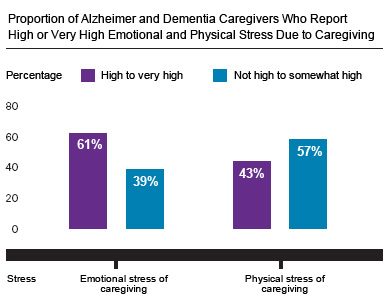
Unpaid caregivers and stress
There are nearly 15 million Alzheimer’s and dementia caregivers providing 17 billion hours of unpaid care valued at $202 billion. Facts and Figures finds that caregivers not only suffer emotionally but also physically. Because of the toll of caregiving on their own health, Alzheimer’s and dementia caregivers had $7.9 billion in additional health care costs in 2010. More than 60 percent of family caregivers report high levels of stress because of the prolonged duration of caregiving and 33 percent report symptoms of depression.
Created from data from the Alzheimer’s Association 2010 Women and Alzheimer’s Poll, October 2010.
Source: Alzheimer’s Association 2011 Alzheimer’s Disease Facts and Figures.
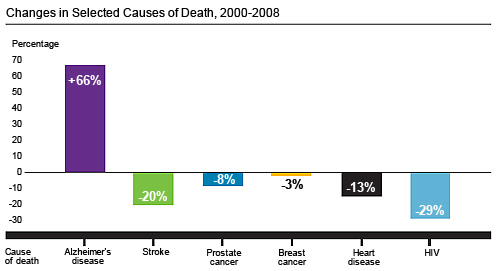
Deaths from Alzheimer's disease
Alzheimer’s is the sixth-leading cause of death in the country and the only cause of death among the top 10 in the United States that cannot be prevented, cured or even slowed. Based on mortality data from 2000-2008, death rates have declined for most major diseases while deaths from Alzheimer’s disease have risen 66 percent during the same period.
Source: Alzheimer’s Association 2011 Alzheimer’s Disease Facts and Figures.
Alzheimer facts in each state
The 2011 Alzheimer's Disease Facts and Figures report also contains data on the impact of this disease in every state across the nation. Click below to see the effect that Alzheimer's is having in your state.Wednesday, February 23, 2011
Caring For Our Brains
As the average life span becomes longer, dementia becomes more common. Swedish scientist Laura Fratiglioni has shown that everyone can minimize his or her risk of being affected. Factors from blood pressure and weight to the degree of physical and mental activity can influence cognitive functioning as one gets older.
The lengthening of the average life span in the population has caused an increase in the prevalence of aging related disorders, one of which is cognitive impairment and dementia. An expert panel estimates that worldwide more than 24 million people are affected by dementia, most suffering from Alzheimer's disease. In the more developed countries, 70 percent of the persons with dementia are 75 years or older. Age is the greatest risk factor for developing dementia. But there is growing evidence that the strong association with increasing age can be, at least partially, explained by a life course cumulative exposure to different risk factors.
Laura Fratiglioni's research group at Karolinska Institutet is a leader in identifying the risk factors that lie behind developing dementia and using this knowledge to develop possible preventative strategies. The group's research has shown that the risk is partly determined by an individual genetic susceptibility, and that active involvement in mental, physical and social activities can delay the onset of dementia by preserving cognitive functions. Further education early in life has a protective effect, and the group's research has shown that it is never too late to get started.
"The brain, just as other parts of the body, requires stimulation and exercise in order to continue to function. Elderly people with an active life - mentally, physically and socially - run a lower risk of developing dementia, and it doesn't matter what the particular activities are", says Professor Laura Fratiglioni.
Laura Fratiglioni's research has shown that physical factors are also significant. Not only high and low blood pressure, but also diabetes and obesity when middle-aged increase the risk of developing dementia after the age of 70. "What is good for the heart is good for the brain", she says.
Knowledge about risk factors and how to protect the brain from dementia is based on observational studies in which scientists have discovered statistical correlations in the population. Scientists in other current studies that are carried out in Europe are investigating what happens when a large number of study participants are given special help to better control vascular risk factors and to stimulate social, physical and mental activities. which should, at least, lead to a delay of dementia onset.
"You could say that we are progressing from observation to experiment. This means that in a few years we will know more about which strategies are most effective in preventing neurodegenerative disorders", says Laura Fratiglioni.
Source:
Sabina Bossi
Karolinska Institutet
The lengthening of the average life span in the population has caused an increase in the prevalence of aging related disorders, one of which is cognitive impairment and dementia. An expert panel estimates that worldwide more than 24 million people are affected by dementia, most suffering from Alzheimer's disease. In the more developed countries, 70 percent of the persons with dementia are 75 years or older. Age is the greatest risk factor for developing dementia. But there is growing evidence that the strong association with increasing age can be, at least partially, explained by a life course cumulative exposure to different risk factors.
Laura Fratiglioni's research group at Karolinska Institutet is a leader in identifying the risk factors that lie behind developing dementia and using this knowledge to develop possible preventative strategies. The group's research has shown that the risk is partly determined by an individual genetic susceptibility, and that active involvement in mental, physical and social activities can delay the onset of dementia by preserving cognitive functions. Further education early in life has a protective effect, and the group's research has shown that it is never too late to get started.
"The brain, just as other parts of the body, requires stimulation and exercise in order to continue to function. Elderly people with an active life - mentally, physically and socially - run a lower risk of developing dementia, and it doesn't matter what the particular activities are", says Professor Laura Fratiglioni.
Laura Fratiglioni's research has shown that physical factors are also significant. Not only high and low blood pressure, but also diabetes and obesity when middle-aged increase the risk of developing dementia after the age of 70. "What is good for the heart is good for the brain", she says.
Knowledge about risk factors and how to protect the brain from dementia is based on observational studies in which scientists have discovered statistical correlations in the population. Scientists in other current studies that are carried out in Europe are investigating what happens when a large number of study participants are given special help to better control vascular risk factors and to stimulate social, physical and mental activities. which should, at least, lead to a delay of dementia onset.
"You could say that we are progressing from observation to experiment. This means that in a few years we will know more about which strategies are most effective in preventing neurodegenerative disorders", says Laura Fratiglioni.
Source:
Sabina Bossi
Karolinska Institutet
Friday, February 18, 2011
Measuring Person-Centered Caregiving
by John Davy on February 15, 2011 in Aging in Action
Person-centered care has become the dominant model for dementia care in the US and UK. This model emphasizes that older adults who are receiving care should be viewed as social beings in a relationship. More concretely, this involves recognizing the personality, values and individual needs of the care recipient, and understanding their behavior through this lens. Within this framework, so-called resistive behaviors, such as withdrawal or aggressive behaviors toward caregivers, are framed as a sign of individual needs.
Despite the growing emphasis on person-centeredness, there has been relatively little done to formally measure the person-centeredness of caregivers. Researchers at Wichita State University and the University of Kansas recently published a study (Lann-Wolcott et al 2011) to validate two measures of person-centered caregiving, and to determine whether person-centeredness would reduce resistive behaviors on the part of individuals with dementia. One of these, the Person-Centered Behavior Inventory (PCBI) measures the extent to which the caregiver performed a set of targeted person-centered behaviors. The other measure, the Global Behavior Scale (GBS), does not count specific behaviors but is a more general assessment of the manner in which care is delivered. Further, the study explored a few other questions about the instruments– for example, whether different kinds of patients responded differently to person-centered care, and whether there was an effect of caregiver age.
More
PowerUp Friday: Culture change “awakenings” « ChangingAging.org
By Dr. Al Power in the Changing Aging blog
Bill asked me to respond to a profile in The New York Times New Old Age blog Tuesday on Sunrise Nursing Home in Two Harbors, Minn, highlighting their work in reducing psychotropic medications in people living with dementia. The resultant “awakenings” of the people coming off the medications has convinced Ecumen, the parent organization, to bring the approach to 15 other nursing homes in the state.
At Sunrise, all 10 people who were taking antipsychotics successfully stopped the medication. This validates several studies (heretofore largely ignored by the medical press), which have shown that, with targeted interventions, the vast majority of people in nursing homes can have their anrtipsychotic drugs removed, with no objective evidence of worsening behavioral distress.
The key for Sunrise was to enlist the entire staff of the home in understanding and learning how to connect with and respond to the needs of the elders–a sort of cross-training in dementia. They also added two staff for this home of 60 elders, costing about $75,000 in annual salaries. But the price of the 10 antipsychotic drugs alone is at least half that annually, not to mention the decreased distress and increased well-being that resulted. A small price to pay indeed.
Kudos to Sunrise for their courageous leap forward, and for getting the word out through the New Old Age blog. It is critical that we educate both the public and long term care providers that there is a clear alternative to “being a zombie in a nursing home,” as Laurel Baxter, the Awakenings project manager, puts it. I have now corresponded with four Times reporters in the past year, one in a personal meeting, but have yet to see this issue seriously addressed in the print version.
In the article, Dr. Mark Lachs of Weill Cornell Medical College made the important observation that these drugs “get perpetualized, like insulin”. I often tell audiences that these drugs are highly addictive–not to the person with dementia, but to the families and care staff.
The article continues to perpetuate some ideas, however, which I believe to be patently false. One is that the medications still have an important role in soothing some people’s distress. While the drugs may be occasionally needed in emergency situations, they will never correct unmet needs, and should never be seen as helping a person attain well-being. The “soothing” is primarily sedation–it is almost never an answer to the real problem.
The other is the notion that these “behaviors” are an inevitable result of brain disease. I believe they are the result of a mismatch between the needs of a changing individual and an environment that is inadequate to meet those needs. As I’ve said before, it’s like expecting a paraplegic to walk, and then sedating him when he gets frustrated that we won’t give him help for his disability.
Last week, Dr. Richard Taylor came to town and reminded us that “I am not dying of a fatal disease; I am living with a chronic disability.” However you choose to classify dementia, this view creates a whole new paradigm for helping each person achieve her or his highest practicable level of well-being. That will never be found in a bottle.
– Dr. Al Power is author of Dementia Beyond Drugs and a weekly contributor to ChangingAging.org
PowerUp Friday: Culture change “awakenings” « ChangingAging.org
Bill asked me to respond to a profile in The New York Times New Old Age blog Tuesday on Sunrise Nursing Home in Two Harbors, Minn, highlighting their work in reducing psychotropic medications in people living with dementia. The resultant “awakenings” of the people coming off the medications has convinced Ecumen, the parent organization, to bring the approach to 15 other nursing homes in the state.
At Sunrise, all 10 people who were taking antipsychotics successfully stopped the medication. This validates several studies (heretofore largely ignored by the medical press), which have shown that, with targeted interventions, the vast majority of people in nursing homes can have their anrtipsychotic drugs removed, with no objective evidence of worsening behavioral distress.
The key for Sunrise was to enlist the entire staff of the home in understanding and learning how to connect with and respond to the needs of the elders–a sort of cross-training in dementia. They also added two staff for this home of 60 elders, costing about $75,000 in annual salaries. But the price of the 10 antipsychotic drugs alone is at least half that annually, not to mention the decreased distress and increased well-being that resulted. A small price to pay indeed.
Kudos to Sunrise for their courageous leap forward, and for getting the word out through the New Old Age blog. It is critical that we educate both the public and long term care providers that there is a clear alternative to “being a zombie in a nursing home,” as Laurel Baxter, the Awakenings project manager, puts it. I have now corresponded with four Times reporters in the past year, one in a personal meeting, but have yet to see this issue seriously addressed in the print version.
In the article, Dr. Mark Lachs of Weill Cornell Medical College made the important observation that these drugs “get perpetualized, like insulin”. I often tell audiences that these drugs are highly addictive–not to the person with dementia, but to the families and care staff.
The article continues to perpetuate some ideas, however, which I believe to be patently false. One is that the medications still have an important role in soothing some people’s distress. While the drugs may be occasionally needed in emergency situations, they will never correct unmet needs, and should never be seen as helping a person attain well-being. The “soothing” is primarily sedation–it is almost never an answer to the real problem.
The other is the notion that these “behaviors” are an inevitable result of brain disease. I believe they are the result of a mismatch between the needs of a changing individual and an environment that is inadequate to meet those needs. As I’ve said before, it’s like expecting a paraplegic to walk, and then sedating him when he gets frustrated that we won’t give him help for his disability.
Last week, Dr. Richard Taylor came to town and reminded us that “I am not dying of a fatal disease; I am living with a chronic disability.” However you choose to classify dementia, this view creates a whole new paradigm for helping each person achieve her or his highest practicable level of well-being. That will never be found in a bottle.
– Dr. Al Power is author of Dementia Beyond Drugs and a weekly contributor to ChangingAging.org
PowerUp Friday: Culture change “awakenings” « ChangingAging.org
Thursday, February 17, 2011
Clearing the Fog in Nursing Homes - NYTimes.com
By PAULA SPAN
“What’s people’s biggest fear? Being a ‘zombie’ in a nursing home,” said Laurel Baxter, the Awakenings project manager.
Any visitor can see what she means. Even in quality nursing homes, some residents sit impassively in wheelchairs or nod off in front of televisions, apparently unable to interact with others or to summon much interest in their lives. Nursing home reformers and regulators have long believed that this disengagement results in part from the overuse of psychotropic medication to quell the troublesome behaviors that can accompany dementia — yelling, wandering, aggression, resisting care. For nearly 25 years, federal law has required that psychotropic drugs (which critics call “chemical restraints”) be used only when necessary to ensure the safety of a resident or those around her.
The drugs can cause serious side effects. Since 2008, the Food and Drug Administration has required a so-called black box warnings on their packaging, cautioning that they pose an increased mortality risk for elderly patients. Nevertheless, a national survey reported that in 2004 about a quarter of nursing home residents were receiving antipsychotic drugs. (Among the antipsychotic drugs most commonly used in nursing homes are Risperdal, Seroquel and Zyprexa.)
Though they may be prescribed less frequently following the F.D.A.’s warnings, these drugs are still overused in long-term care, said Dr. Mark Lachs, chief of geriatrics at Weill Cornell Medical College. And once the pills are prescribed, residents keep taking them. “They get perpetualized, like insulin,” he told me, even though the behaviors they’re meant to soothe may wane anyway as dementia progresses.
“If a place is understaffed, if it takes particularly unruly patients, you can see how it happens,” Dr. Lachs added. “Behavioral interventions are far more time-consuming than giving a pill.”
Nevertheless, Ecumen’s Awakenings project emphasizes nondrug responses. “Medications have a place, but that shouldn’t be the first thing you try,” said Eva Lanigan, director of nursing at the Two Harbors facility.
So the home trained its entire staff (housekeepers, cooks, dining room servers, everyone) in a variety of tools to calm and reassure its 55 residents: exercise, activities, music, massage, aromatherapy. It taught people the kind of conversation known as “redirecting” — listening to elders and responding to them without insisting on facts that those with dementia can’t absorb or won’t recall.
“The hands-on, caring part is the most important,” Ms. Lanigan said. “Sometimes, people just want a hug. You sit and hold their hand.”
At the same time, consulting with a geriatric psychiatrist and a pharmacist, the home began gradually reducing the doses of antipsychotics and antidepressants for patients whose families agreed. Among them: the woman with the mysterious cries.
As Dr. Lachs pointed out, behavioral interventions are labor-intensive. Two Harbors hired an additional nurse to oversee those efforts, and Ms. Lanigan was available to answer staff questions around the clock. Ecumen estimates that introducing the program to a 60-bed nursing home cost an additional $75,000 a year for two full-time employees.
The results startled even the believers, however. Every resident on antipsychotics (about 10) was able to stop taking them, and 30 to 50 percent of those taking antidepressants also did well without them. When drugs still seemed necessary, “we tried to reduce them to the lowest dose possible,” Ms. Lanigan said.
More
Tuesday, February 15, 2011
Deafness and Dementia May Be Linked
By Michael Smith, North American Correspondent, MedPage Today
Hearing loss appears to be associated with an increased risk of developing dementia, researchers reported.
In a prospective analysis of more than 600 people free of cognitive decline, the risk of all-cause dementia rose 27% for every 10-decibel loss of hearing at the start of the almost 12-year study, according to Frank Lin, MD, PhD, of the Johns Hopkins School of Medicine, and colleagues.
The risk of Alzheimer's rose in a similar fashion, but did not reach statistical significance, Lin and co-authors reported in the February issue of Archives of Neurology.
The findings support the notion that the social isolation caused by deafness may be part of the cause of dementia, Lin and colleagues argued -- especially since the association was only seen for deafness above the level at which verbal communication is impaired.
Full Article
Hearing loss appears to be associated with an increased risk of developing dementia, researchers reported.
In a prospective analysis of more than 600 people free of cognitive decline, the risk of all-cause dementia rose 27% for every 10-decibel loss of hearing at the start of the almost 12-year study, according to Frank Lin, MD, PhD, of the Johns Hopkins School of Medicine, and colleagues.
The risk of Alzheimer's rose in a similar fashion, but did not reach statistical significance, Lin and co-authors reported in the February issue of Archives of Neurology.
The findings support the notion that the social isolation caused by deafness may be part of the cause of dementia, Lin and colleagues argued -- especially since the association was only seen for deafness above the level at which verbal communication is impaired.
Full Article
Friday, February 4, 2011
Profit Status of Hospice May Mold Patient Census from MedPage Today
By Todd Neale, Staff Writer, MedPage Today
For-profit hospice agencies -- which have been increasing in number in recent years -- are more likely to enroll patients with dementia and noncancer diagnoses who require less care than nonprofit hospices, researchers found.
Full Article
For-profit hospice agencies -- which have been increasing in number in recent years -- are more likely to enroll patients with dementia and noncancer diagnoses who require less care than nonprofit hospices, researchers found.
Full Article
Friday, January 14, 2011
Online Tool Can Help Seniors Quickly Determine Risk For Dementia
A quick online assessment tool developed by Johns Hopkins researchers can help worried seniors find out if they are at risk of developing dementia and determine whether they should seek a comprehensive, face-to-face diagnosis from a physician, according to a new study.
The tool, which is being refined and validated, is not meant to replace a full evaluation from a doctor that includes a physical exam, blood work, imaging studies and more. Instead, this assessment provides a scientific way to help a person educate herself about a disease that doctors now believe is best managed if caught early.
"As the population ages and dementia becomes more prevalent, it's important to get people diagnosed early," says Jason Brandt, Ph.D., a professor of psychiatry and behavioral sciences at the Johns Hopkins University School of Medicine and the leader of the study appearing online in the journal Alzheimer's & Dementia. "Alzheimer's disease and other types of dementia don't just creep up on you. They're incubating for decades in the brain. This tool is potentially very useful in determining who is at risk."
Among the questions asked on the Dementia Risk Assessment are about whether a person has a history of high blood pressure, depression, diabetes, high cholesterol or head injury, all of which are considered well-documented risk factors for dementia. The assessment also includes a simple memory test that could point to a subtle cognitive decline, Brandt says.
The study analyzed responses from 357 people over the age of 50 who took the assessment here. Those who scored lowest on the memory test were significantly older, and were more likely to be men, have hypertension and report severe memory problems. And while only 9 percent of respondents reported they had severe memory problems, more than one-third said they had a first-degree relative with dementia or severe memory loss - a major risk factor for the condition.
The assessment takes just five to 10 minutes to complete online, and the questions have been borrowed from other scientifically valid assessments.
Brandt says the assessment may be helpful in weeding out those who have signs of dementia from those who are simply experiencing the memory loss that comes with aging or a busy lifestyle. Not being able to find your keys or remembering where you parked is rarely a failsafe sign that a person is suffering from dementia.
"Our goal is really to educate people about what some of the risk factors are and, often, to put people's minds at ease," he says. "We somehow expect our memories to be as good at 50 as they were at 30. We can't run as fast as we could 20 years ago. Why should our memory be as good?"
Alzheimer's disease still has no cure, but early interventions are being used to slow cognitive decline, Brandt says. Brandt says he hopes this assessment will get patients with several risk factors or symptoms to consult a physician.
Some forms of dementia, he says, may not be permanent, and getting to a doctor could help to restore brain function.
Sometimes, Brandt says, seniors are afraid to mention they are having memory or other cognitive issues. The new tool, he says, lets them learn more about themselves and their individualized risk factors in the privacy of their homes.
The aging population means that many more people will be diagnosed with dementia in the coming decades.
"Screening procedures that have demonstrated validity and predictive value and are noninvasive, brief and do not require any special expertise to administer may have the greatest potential to be accepted and actually used by the greatest number of people," Brandt says. "This tool, which this study preliminarily validates, is the first step toward developing such a procedure."
Brandt and colleagues are currently conducting research that compares a patient's results from the online Dementia Risk Assessment with an in-person, comprehensive evaluation by a physician at one of two Johns Hopkins clinics.
This research was supported by a grant from the Geoffrey Beene Foundation's GB Gives Back Alzheimer's Initiative. Mark Rogerson, Ph.D., of Johns Hopkins also worked on this study.
Source:
Johns Hopkins Medicine
The tool, which is being refined and validated, is not meant to replace a full evaluation from a doctor that includes a physical exam, blood work, imaging studies and more. Instead, this assessment provides a scientific way to help a person educate herself about a disease that doctors now believe is best managed if caught early.
"As the population ages and dementia becomes more prevalent, it's important to get people diagnosed early," says Jason Brandt, Ph.D., a professor of psychiatry and behavioral sciences at the Johns Hopkins University School of Medicine and the leader of the study appearing online in the journal Alzheimer's & Dementia. "Alzheimer's disease and other types of dementia don't just creep up on you. They're incubating for decades in the brain. This tool is potentially very useful in determining who is at risk."
Among the questions asked on the Dementia Risk Assessment are about whether a person has a history of high blood pressure, depression, diabetes, high cholesterol or head injury, all of which are considered well-documented risk factors for dementia. The assessment also includes a simple memory test that could point to a subtle cognitive decline, Brandt says.
The study analyzed responses from 357 people over the age of 50 who took the assessment here. Those who scored lowest on the memory test were significantly older, and were more likely to be men, have hypertension and report severe memory problems. And while only 9 percent of respondents reported they had severe memory problems, more than one-third said they had a first-degree relative with dementia or severe memory loss - a major risk factor for the condition.
The assessment takes just five to 10 minutes to complete online, and the questions have been borrowed from other scientifically valid assessments.
Brandt says the assessment may be helpful in weeding out those who have signs of dementia from those who are simply experiencing the memory loss that comes with aging or a busy lifestyle. Not being able to find your keys or remembering where you parked is rarely a failsafe sign that a person is suffering from dementia.
Alzheimer's disease still has no cure, but early interventions are being used to slow cognitive decline, Brandt says. Brandt says he hopes this assessment will get patients with several risk factors or symptoms to consult a physician.
Some forms of dementia, he says, may not be permanent, and getting to a doctor could help to restore brain function.
Sometimes, Brandt says, seniors are afraid to mention they are having memory or other cognitive issues. The new tool, he says, lets them learn more about themselves and their individualized risk factors in the privacy of their homes.
The aging population means that many more people will be diagnosed with dementia in the coming decades.
"Screening procedures that have demonstrated validity and predictive value and are noninvasive, brief and do not require any special expertise to administer may have the greatest potential to be accepted and actually used by the greatest number of people," Brandt says. "This tool, which this study preliminarily validates, is the first step toward developing such a procedure."
Brandt and colleagues are currently conducting research that compares a patient's results from the online Dementia Risk Assessment with an in-person, comprehensive evaluation by a physician at one of two Johns Hopkins clinics.
This research was supported by a grant from the Geoffrey Beene Foundation's GB Gives Back Alzheimer's Initiative. Mark Rogerson, Ph.D., of Johns Hopkins also worked on this study.
Source:
Johns Hopkins Medicine
Report Calls for Action to Stem Alzheimer’s Deluge | StarTribune.com
By WARREN WOLFE, Star Tribune
The number of Minnesotans with Alzheimer's disease and other forms of dementia will swell from 88,000 now to 198,000 in the next 30 years, with the prospect that state coffers, families and employers could be overwhelmed by the stress and costs of care, according to a report that will be delivered to the Legislature on Thursday. Without action, the report concludes, "the burden will be heaviest on public funding as the number of individuals with Alzheimer's increase and their family caregivers are stretched beyond their capacity and exhaust their resources."
Full Article
The number of Minnesotans with Alzheimer's disease and other forms of dementia will swell from 88,000 now to 198,000 in the next 30 years, with the prospect that state coffers, families and employers could be overwhelmed by the stress and costs of care, according to a report that will be delivered to the Legislature on Thursday. Without action, the report concludes, "the burden will be heaviest on public funding as the number of individuals with Alzheimer's increase and their family caregivers are stretched beyond their capacity and exhaust their resources."
Full Article
Thursday, January 13, 2011
Elderly Couple Found Frozen to Death After Getting Lost During Drive
By Mary Pat Flaherty - Washington Post
Jo Rinehart arrived at her parents' home and knew the empty driveway and locked house were bad signs. When she went inside, she saw that her mother's cellphone had been forgotten on a kitchen counter. It was filled with worried, frantic and plaintive messages from Rinehart and her siblings, all left in the previous 12 hours.
Rinehart's parents, William Fresch, 85, and his wife, Betty, 79, had not been seen or heard from since about 5:15 p.m. Friday, when they left Rinehart's home in Mechanicsburg, Pa., for what was usually a 40-minute drive back to their house in Shippensburg, Pa., 25 miles north of the Maryland border.
The grown children had brokered a deal that might sound all too familiar to adult children trying to protect - and yet, respect - aging parents. The Fresches could keep their car, but drive only to Rinehart's home or around Shippensburg, and only if they called to say they had made it back home safely.
After she didn't find her parents at their house, Rinehart, 54, and her husband called police, who put out a regional alert for the couple. Rinehart and her husband talked to reporters, posted her parents' pictures on Facebook and searched roadways themselves, even going up in a private helicopter Tuesday to scour the area.
By 11 a.m. Tuesday, their wait was over, Her parents' bodies had been found. Authorities think William and Betty froze to death in a steep farm field off rural Gene Hemp Road in Frederick County, Md.
Full Article
Jo Rinehart arrived at her parents' home and knew the empty driveway and locked house were bad signs. When she went inside, she saw that her mother's cellphone had been forgotten on a kitchen counter. It was filled with worried, frantic and plaintive messages from Rinehart and her siblings, all left in the previous 12 hours.
Rinehart's parents, William Fresch, 85, and his wife, Betty, 79, had not been seen or heard from since about 5:15 p.m. Friday, when they left Rinehart's home in Mechanicsburg, Pa., for what was usually a 40-minute drive back to their house in Shippensburg, Pa., 25 miles north of the Maryland border.
The grown children had brokered a deal that might sound all too familiar to adult children trying to protect - and yet, respect - aging parents. The Fresches could keep their car, but drive only to Rinehart's home or around Shippensburg, and only if they called to say they had made it back home safely.
After she didn't find her parents at their house, Rinehart, 54, and her husband called police, who put out a regional alert for the couple. Rinehart and her husband talked to reporters, posted her parents' pictures on Facebook and searched roadways themselves, even going up in a private helicopter Tuesday to scour the area.
By 11 a.m. Tuesday, their wait was over, Her parents' bodies had been found. Authorities think William and Betty froze to death in a steep farm field off rural Gene Hemp Road in Frederick County, Md.
Full Article
Wednesday, January 12, 2011
Dementia at the Kitchen Table - NYTimes.com
By CELIA WATSON SEUPEL
Like so many of my friends, I recently brought my mother home to live with my family. At 92, Mom still laughs readily, especially at herself; still dances a few steps whenever she hears jazz; still loves literature, though she’s more likely to read Sue Grafton than James Joyce these days.
She just can’t remember anything.
We extracted Mom from her home of 40 years only by urgent persuasion and promises of eventual return. The place was a wreck, littered with crumpled tissues, filthy linens, mouse droppings and piles of junk-mail solicitations that confounded her. I do not think she will ever go back. And after four months of living together, I do not know if I can manage to stay. Mom runs like an Eveready battery. She is never still.
Full Article
Thursday, January 6, 2011
A “Blinding Flash of the Obvious” « ChangingAging.org
by Dr Al Power in Changing Aging
Here’s a “Blinding Flash of the Obvious,” or “BFO”, as our friend Jane Verity, CEO of Dementia Care Australia would say. On New Year’s Day, the New York Times slipped in an article on new approaches to dementia. My inbox lit up with forwarded copies, and many of us celebrated the recognition of something many of us have been preaching for some time.
The article has its share of language issues, such as referring to people as “difficult” or “acting out”, but it hits on several central tenets of what I have come to call an “experiential” approach to dementia. Here are a few of those ideas alluded to in the article:
This leads to the second point: in spite of the value of cosmetic changes, focused activities and programmatic approaches, the real key to well-being lies in the spaces–those individual moments that underlie every interpersonal interaction–not just during bingo, but when greeting someone, giving her a bath or helping with a meal. These interactions leave an indelible impression on a person that will determine how their days (and yours) will play out. As my mother-in-law said to my wife one day, deep into her life with Alzheimer’s, “I don’t know your name, but I know you’re my friend.” One of the best references on these moments is Nancy Pearce’s book, Inside Alzheimer’s which is coming out in a revised edition this year.
Full Article
Here’s a “Blinding Flash of the Obvious,” or “BFO”, as our friend Jane Verity, CEO of Dementia Care Australia would say. On New Year’s Day, the New York Times slipped in an article on new approaches to dementia. My inbox lit up with forwarded copies, and many of us celebrated the recognition of something many of us have been preaching for some time.
The article has its share of language issues, such as referring to people as “difficult” or “acting out”, but it hits on several central tenets of what I have come to call an “experiential” approach to dementia. Here are a few of those ideas alluded to in the article:
- The key to addressing emotional distress is to know the person, to understand his needs as he sees them, and to work creatively to find solutions that fulfill these needs, without judgment. This often requires that we take away our paternalistic view of people with dementia as being incapable, or somewhat less entitled to choices that we all take for granted. People choosing when they get up or go to bed? “Allowing” a 96-year old to eat chocolate?? How did we get to the point where these are startling revelations??? BFO.
- There are many cosmetic and programmatic changes recommended in the article and they all have value. But the gem of the article, in my mind, is the University of Iowa study that showed how durable people’s memories are of positive or negative emotional experiences–even more so than people without dementia–and long after their memory of the details of the experience have faded.
This leads to the second point: in spite of the value of cosmetic changes, focused activities and programmatic approaches, the real key to well-being lies in the spaces–those individual moments that underlie every interpersonal interaction–not just during bingo, but when greeting someone, giving her a bath or helping with a meal. These interactions leave an indelible impression on a person that will determine how their days (and yours) will play out. As my mother-in-law said to my wife one day, deep into her life with Alzheimer’s, “I don’t know your name, but I know you’re my friend.” One of the best references on these moments is Nancy Pearce’s book, Inside Alzheimer’s which is coming out in a revised edition this year.
Full Article
Wednesday, December 29, 2010
Car Emissions Cloud the Mind
Image by Getty Images via @daylifeBy Todd Neale, Staff Writer, MedPage TodayPollution from traffic was associated with worse cognitive function in a cohort of older men, researchers found.
A doubling of exposure to black carbon -- a marker for traffic pollution -- was associated with a 30% greater chance of having a low score on a screening test for dementia (OR 1.3, 95% CI 1.1 to 1.6), according to Melinda Power, a doctoral student at the Harvard School of Public Health, and colleagues.
A composite score of six other cognitive function tests was also lower among men with greater exposure to black carbon, the researchers reported online in Environmental Health Perspectives.
"This is the first study to find an association between traffic-related air pollution and cognition in older men, and only the second to consider the relationship in older adults," they wrote.
Continue Reading
Sunday, December 12, 2010
Drugging Dementia Patients Serious Problem, Panel Says
By Joyce Frieden, News Editor, MedPage Today
As baby boomers age, the nation faces a crisis in care for an ever-expanding population of dementia patients and over-medication will be a big problem, panelists said at a Senate Aging Committee forum on Wednesday.
There are currently about five million patients with Alzheimer's disease and other forms of dementia, and 11 million family members are caring for these patients, Patricia Grady, PhD, director of the National Institute of Nursing Research, said at the forum.
"We're facing the increasing age of the population," Grady said. "The urgency and the tempo is really increasing. Those in this field have a feeling we're headed in a very fast train toward the end of a cliff."
Over-medication occurs often with dementia patients, according to the panelists, who noted that patients' way of complaining about physical illness is often mistaken by caregivers and family members as aggressiveness or unruly behavior.
Full Article
As baby boomers age, the nation faces a crisis in care for an ever-expanding population of dementia patients and over-medication will be a big problem, panelists said at a Senate Aging Committee forum on Wednesday.
There are currently about five million patients with Alzheimer's disease and other forms of dementia, and 11 million family members are caring for these patients, Patricia Grady, PhD, director of the National Institute of Nursing Research, said at the forum.
"We're facing the increasing age of the population," Grady said. "The urgency and the tempo is really increasing. Those in this field have a feeling we're headed in a very fast train toward the end of a cliff."
Over-medication occurs often with dementia patients, according to the panelists, who noted that patients' way of complaining about physical illness is often mistaken by caregivers and family members as aggressiveness or unruly behavior.
Full Article
Monday, November 1, 2010
Personal Finances and Alzheimer's - NYTimes.com
Personal Finances and Alzheimer’s
By THE NEW YORK TIMESThe Times reports this morning on the difficult questions raised for lawyers, doctors and financial advisers when a client begins to show signs of dementia.
New research shows that one of the first signs of impending dementia is an inability to understand money and credit, contracts and agreements. It is not just families who are affected — financial advisers and lawyers say they are finding themselves in a bind when their clients’ minds seem to be slipping….All too often, though, no one protects people who are losing their capacity to execute documents and their judgment about finances. Their stories of decisions gone awry tend to end badly.Read the full article.
Sunday, October 17, 2010
Tuesday, October 12, 2010
Speakers of More Than One Language May See Delayed Onset of Dementia Symptoms - WSJ.com
A lifetime of speaking two or more languages appears to pay off in old age, with recent research showing the symptoms of dementia can be delayed by an average of four years in bilingual people.
Multilingualism doesn't delay the onset of dementia—the brains of people who speak multiple languages still show physical signs of deterioration—but the process of speaking two or more languages appears to enable people to develop skills to better cope with the early symptoms of memory-robbing diseases, including Alzheimer's.
Full Article
Multilingualism doesn't delay the onset of dementia—the brains of people who speak multiple languages still show physical signs of deterioration—but the process of speaking two or more languages appears to enable people to develop skills to better cope with the early symptoms of memory-robbing diseases, including Alzheimer's.
Full Article
Thursday, October 7, 2010
When Sleep Apnea Masquerades as Dementia - NYTimes.com
The woman who came to see Dr. Ronald Petersen, an Alzheimer’s specialist at the Mayo Clinic, was only in her 60s but complained that she was having trouble concentrating. “Her attention was waning,” Dr. Petersen recalled. “She couldn’t follow a television program or stay focused during a conversation.”
She was probably developing dementia, Dr. Petersen thought as he took her history. But along the way he asked, as he usually does, how she was sleeping. The woman, who lived alone, hadn’t noticed any problems.
Her son, however, had stayed with her the previous night to drive her to the appointment. “She was snoring like a freight train,” he reported.
Aha. Overnight sleep testing determined that the woman had obstructive sleep apnea — nightlong interruptions in breathing that reduce oxygen flow to the brain and prevent deep sleep. The interruptions can happen 10 or more times an hour and are quite common in older adults, exacerbating — or sometimes mimicking — dementia symptoms.
Full Article
Subscribe to:
Posts (Atom)